Skip to the content
Economic and Industrial Impact.
The financial difficulties experienced by all early railways forced massive public spending in the form of cash grants, guaranteed interest, land grants, rebates and rights-of-way. In return, the railways contributed to general economic developments, and the indirect benefits for business and employment were remarkable. Unlike canals, railways extended into new territories and pushed the agricultural and timber frontiers westward and northward. The effect of railways on emerging urban centres was crucial and dramatic. Toronto’s dominant position in south-central Ontario was clearly accepted by its rail connections.
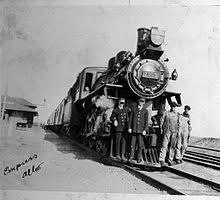
It benefits from its connections with the Great Western and its central place on the Grand Trunk Railway (GTR), neither of which it had done much to help build. It also tapped the northern hinterland via the Ontario, Simcoe and Huron Railway (completed to Collingwood, on Georgian Bay, in 1855, with a branch line to Belle Ewart on the south shore of Lake Simcoe), the Toronto, Grey and Bruce Railway (completed to Owen Sound, on Georgian Bay, in 1873), and the Toronto and Nipissing Railway (extended toLake Simcoe in 1877). Toronto was also home to the first locomotive built in Canada; the Toronto No. 2 of the Ontario, Simcoe and Huron line was built by James Good of Toronto in 1853.
While railways were also constructed in populated and nonindustrial areas such as Newfoundland, they were not as profitable and tended to diminish in size and importance over time. The development of a Newfoundland Railway system is a case in point. In 1919, the Grand Trunk Railway (GTR) was earning $16,000 per mile while the Newfoundland system was earning $1,500. The amount of money the GTR was very different from the Newfoundland system.
 MANABU_KU & DANEIL_YEUNG